
Landowner Joint Ventures in Adelaide: Sell, Develop, or Partner?
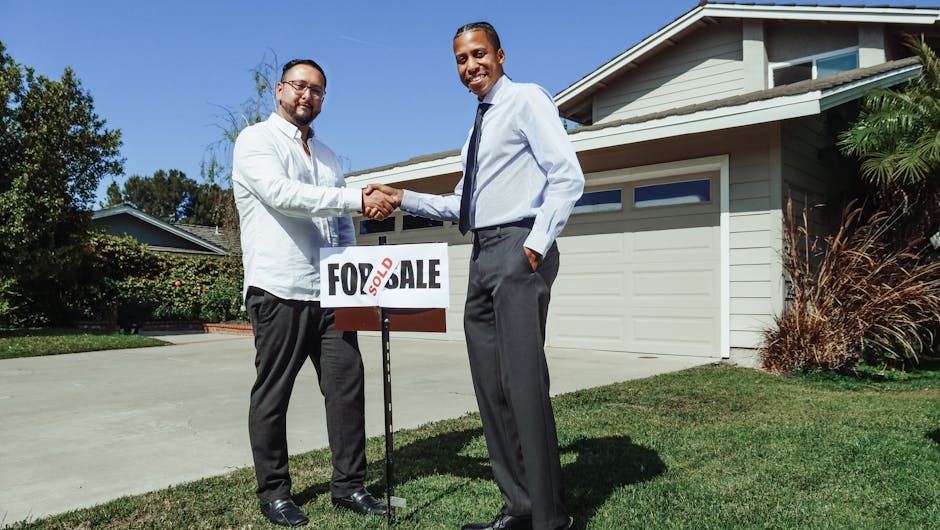
If you own a development-ready block in Adelaide, you broadly have three choices: sell outright, develop it yourself, or enter a landowner joint venture where a developer does the heavy lifting and you share in the upside. Each path carries a different mix of upside, risk and control — and the wrong structure can quietly erase the very profit you were chasing. This is a business decision first and a legal one second, so it pays to weigh the options carefully before you sign anything.
Sell, develop, or partner: the three paths compared
Sell outright — Upside: Lowest — you capture today's land value, not the development margin; Risk: Lowest — paid at settlement, no delivery exposure; Control: None after settlement; Best for: Owners who want certainty and a clean exit, or who lack the time or capital to develop
Develop yourself — Upside: Highest — you keep the full margin; Risk: Highest — you carry approvals, funding, construction and sales risk; Control: Full; Best for: Experienced owners with capital, time and the appetite to run a project end to end
JV-partner — Upside: Shared — you share the development margin above land value; Risk: Shared — typically lower than going it alone, but you are exposed to delivery; Control: Shared — negotiated in the agreement; Best for: Owners who want more than the land value but want a developer to carry the heavy lifting
A joint venture often sits in the middle: more upside than selling, less exposure than developing solo. But "middle" is not a free lunch — your return still depends on the project being delivered, and on the structure being drafted to protect you.
The three SA landowner-developer structures
In South Australia, landowner-developer deals typically take one of three legal shapes (source: DW Fox Tucker Lawyers):
Services Development Agreement — How it works: You engage the developer as project manager for a fee; Your role: You stay the owner; developer is paid to deliver
Joint Venture Development Agreement — How it works: You become an active partner sharing in profits; Your role: Shared risk and shared reward
Sale Development Agreement — How it works: The developer buys the land, but you retain some control; Your role: Closest to a sale, with conditions
For staged community-parcel development, a development agreement is not optional — the Community Titles Act 1996 (SA) makes one mandatory (source: DW Fox Tucker Lawyers).
A SA-specific trap worth flagging: a JV can inadvertently create a trust relationship. The agreement should explicitly disclaim a trust, because a constructive or inadvertent trust can trigger a dutiable event and further stamp duty liability (source: DW Fox Tucker Lawyers).
Profit splits: why there is no "standard" deal
You may see splits quoted as 50/50, 60/40 or 70/30, or as a fixed land payment plus a profit share. Treat these as illustrative only. There is no published SA benchmark, and the actual split depends on land value, capital contribution, who funds and secures the approvals, who carries the risk, and who is responsible for delivery. A landowner who contributes a high-value, approval-ready site and takes little delivery risk negotiates a very different deal from one contributing raw land into a developer-funded, developer-delivered project. The number on the term sheet only means something once you understand what each party is actually putting in and taking on.
The landowner should not only ask "what percentage do I get?" but "what is my land value credited at, who funds the approvals, who guarantees the construction debt, who controls variations, and when is profit calculated and paid?" - these terms often matter more than the headline split.
What land division actually involves in SA
Whichever pathway you choose, development usually depends on land division. In South Australia, a land division may be structured through Torrens title, Community title, Community Strata Title, or arrangements involving an existing Strata title. A division usually involves local council, statutory referral bodies such as SA Water, SA Power Networks and transport authorities, and the state-level assessment / coordination process. Once conditions have been satisfied and the necessary clearances obtained, the Certificate of Approval process can be completed. The Plan of Division and related dealings are then lodged with Land Services SA before new titles can be issued. Note that new Strata divisions can no longer be created — new shared-title divisions generally use Community title or Community Strata title structures (Source: Land Services SA).
In terms of cost and timing, Land Services SA has previously stated in its fact sheet that a simple division of one parcel into two allotments may cost around $20,000 to $25,000; because multiple organisations are involved, the whole process may take several months — sometimes even years (Source: Land Services SA). Treat this as an indicative reference from the time the fact sheet was printed and for the simplest case only, not a current quote. Larger divisions and projects involving civil works such as water, sewer, power and roads are usually more expensive and project-specific, so confirm a realistic budget for your own site.
Open space contributions and minimum block sizes
Two factors quietly shape feasibility:
Open space. Open space. Under section 198 of the Planning, Development and Infrastructure Act 2016 (SA), where land is divided into 20 allotments or fewer and one or more allotments is less than one hectare, or where the division relates to Community title / Strata title arrangements, the relevant authority may, unless excluded by the regulations, require an open space contribution or require land to be provided to satisfy the relevant open space requirement (Source: PDI Act 2016 s198). Under the 2026–27 fees notice, from 1 July 2026, the open space monetary contribution is $10,166 for each eligible new allotment or strata lot not exceeding one hectare in Greater Adelaide, and $3,723 for each eligible new allotment or strata lot not exceeding one hectare in other parts of South Australia (Source: PlanSA / SA Government Gazette). These gazetted rates are generally reviewed annually, so confirm the current figures with PlanSA or the latest Government Gazette before relying on them.
Minimum block size. Under the Planning and Design Code, minimum site area and frontage width are not single statewide numbers; they are determined by zone, dwelling type, specific address and any applicable Technical and Numeric Variations (TNVs). In the General Neighbourhood Zone, public planning materials commonly describe detached, semi-detached and group dwellings as having a minimum site area of around 300 square metres, while row dwellings may be as low as around 200 square metres. However, frontage width, average width and other numeric requirements must be checked for the specific address in the Planning and Design Code (Source: PlanSA). As an industry rule of thumb, Adelaide sites usually need to be around 700 square metres or more before subdivision is worth considering — although the true minimum depends on your specific zone, TNVs, lot shape and frontage conditions (Source: City Surveyors Adelaide).
The tax question can change everything
How your profit is taxed often matters more than the headline split. Whether development profit is treated as a capital gain or as ordinary income turns on the ATO's mere-realisation versus profit-making-undertaking test (per Taxation Ruling TR 92/3). Profit is ordinary income — not a capital gain — where the intention was to make a profit in the course of a business operation or commercial transaction, which can apply even to a single, one-off transaction by someone not otherwise in business (source: ATO).
Goods and Services Tax (GST) adds another layer of complexity. It generally applies to the sale of new residential premises, or subdivided potential residential land, as part of an enterprise or commercial activity. The margin scheme allows an eligible GST-registered seller to calculate GST on 1/11 of the margin — the sale price less the eligible acquisition cost — rather than on the full sale price, but it usually requires the buyer and seller to agree in writing on or before settlement. Using the margin scheme will generally affect the buyer’s GST credit entitlement, so it should be confirmed by a tax adviser for the specific transaction (Source: ATO). Since 1 July 2018, purchasers of new residential premises or potential residential land are generally required to withhold GST at settlement and pay it directly to the ATO — usually 1/11 of the contract price, or 7% of the contract price if the margin scheme applies (Source: ATO).
On the demand side, there is a tailwind: for contracts entered into on or after 6 June 2024, South Australia abolished the property-value cap on stamp duty relief for eligible first home buyers purchasing a new home, off-the-plan apartment, vacant land, or a house-and-land/comprehensive building contract — meaning no stamp duty regardless of the eligible property's value, which strengthens demand for newly built and divided housing (source: RevenueSA).
This is general information, not tax advice — confirm your structure with a SA-qualified adviser.
If a foreign investor is involved
Foreign persons buying vacant residential land for development are usually subject to FIRB conditions: at least one dwelling must be built, construction must be completed within four years of approval, the land must not be sold before construction is completed, and evidence must be provided (Source: FIRB). Separately, from 1 April 2025, foreign persons are prohibited from purchasing established dwellings in Australia; according to the 2026–27 Budget update, this temporary ban has been announced as extended to 30 June 2029. The ban has limited exceptions, including investments that significantly increase housing supply or support housing supply; the specific thresholds, conditions and scope should be checked against current FIRB / Treasury guidance. The government has also strengthened ATO / Treasury audit arrangements targeting foreign “land banking” (Source: FIRB / Treasury; ATO). FIRB dates and fees change, so confirm the latest position before relying on them.
Frequently asked questions
Q: What's the difference between a JV and just selling my land to a developer? In a Joint Venture Development Agreement you stay an active partner and share in the profits (and risks); in a Sale Development Agreement the developer buys the land outright, though you may retain some control (source: DW Fox Tucker Lawyers).
Q: Is my development profit taxed as capital gain or income? It depends. The ATO applies the mere-realisation versus profit-making-undertaking test (TR 92/3); a profit-making intention in a commercial transaction can make it ordinary income, even on a one-off deal (source: ATO).
Q: How much does it cost to subdivide land in Adelaide? Land Services SA states a simple two-allotment division costs roughly $20,000 to $25,000; larger divisions and projects with civil works are typically more expensive and project-specific (source: Land Services SA).
Q: How big does my block need to be to subdivide? It depends on the zone and the specific address. In the General Neighbourhood Zone, some dwelling forms commonly use a minimum site area reference of around 300 square metres, but the actual requirement also depends on dwelling type, frontage width, TNVs, overlays and site conditions. Industry surveyors often use around 700 square metres as a rule of thumb for whether a one-into-two subdivision is worth investigating further (Source: PlanSA; City Surveyors Adelaide).
Q: Do I have to give up land for open space? Under PDI Act 2016 s198, for a division into 20 allotments or fewer where one or more allotments is less than one hectare, or where the division relates to Community title / Strata title arrangements, the relevant authority may, unless excluded by the regulations, require an open space contribution or require land to be provided to satisfy the relevant open space requirement (Source: PDI Act 2016 s198).
How Cyberate PM can help
A joint venture only de-risks your block if the structure protects you — and that depends on the homework done before you sign. As an Adelaide-based development manager, Cyberate PM helps landowners de-risk the decision in three ways: an independent feasibility study that pressure-tests the numbers behind a proposed split; a clear-eyed comparison of selling, developing, or partnering against your goals and risk appetite; and structuring the chosen path — from a Services agreement through to a full joint venture — so your contribution, return and downside protections are spelled out. We also help you understand the cost layers that move a deal, including development management fees.
Before you sign a JV term sheet, get an independent feasibility and risk review. Learn more on our landowner partnership page, then book a consultation to walk through your block, your numbers, and the structure that fits.
Sources
DW Fox Tucker Lawyers — Series for South Australian Property Developers: Landowner relationship
Planning, Development and Infrastructure Act 2016 (SA) s198 (AustLII)
PlanSA — Planning and Development Fund / Open Space Contributions
PlanSA — General Neighbourhood Zone, Planning and Design Code
City Surveyors Adelaide — What is the Minimum Block Size for Subdivision in Adelaide
RevenueSA — Stamp Duty Relief for Eligible First Home Buyers (from 6 June 2024)
Foreign Investment in Australia (Treasury/FIRB) — Residential land
Expert property development and project management insights.
Not Sure Whether Your Site Stacks Up?
Send us the address and your goal. We will identify the first planning, buildability and feasibility questions before you commit further capital.